
Part of our ATI RN guide, which covers Content Mastery, proficiency levels, the Comprehensive Predictor, Capstone and study tips.
Question 1
ATI Comprehensive Predictor Assessment. A nurse is creating a plan of care for a client who is taking clozapine. Which of the following interventions should the nurse include? (Select all that apply.)
- Educate client to have neutrophil count drawn every month.
- Teach the client about healthy high-calorie snacks.
- Encourage the client to engage in regular physical activity.
- Instruct the client to continue taking clozapine.
- Instruct client to use sugarless gum or hard candy.
Question 2
A nurse is assessing an infant who is postoperative following a ventriculoperitoneal (VP) shunt placement. Which of the following findings should the nurse expect?
- Irritability
- Decreased head circumference
- Drowsiness
- Incisional drainage tests positive for glucose
Question 3
A nurse is caring for a client who has a strained knee and is prescribed ice therapy. Which of the following actions should the nurse take?
Stop Guessing On Nursing Exams
Thousands of nursing students are already using ATI Proctored Exams to practice realistic NCLEX and ATI TEAS-style questions before their exams.
Unlock Free Mock Tests →- Check the client’s skin after 15 min.
- Apply ice directly on the client’s skin.
- Tell the client ice therapy will increase blood flow.
- Apply heat after 30 min of ice therapy.
Question 4
A nurse is caring for a client who is postoperative following an open colectomy. Which of the following findings places the client at risk for delayed wound healing?
- Hyperemesis
- INR 1.1
- HbA1c 5.6%
- Uncontrolled pain
Question 5
A nurse is assessing a client who is experiencing a hyperglycemic hyperosmolar state (HHS). Which of the following findings should the nurse expect? (Select all that apply.)
- Absent urine ketones
- Blood glucose 685 mg/dL
- Dehydration
- BUN 8 mg/dL
- Fruity breath odor
Question 6
A nurse is providing teaching to a parent of a 6-month-old infant about introducing solid foods. Which of the following statements should the nurse include?
- “Introduce one new food every 3 to 5 days when starting solid foods.”
- “You can add honey to sweeten vegetables if they do not like them.”
- “You can mash canned vegetables instead of purchasing baby food.”
- “Raw carrots are a good snack to provide and can help with teething.” ATI Comprehensive Predictor Assessment
Question 7
A nurse is preparing to transport a client to the operating room. The nurse has just administered a preoperative intravenous anxiolytic. Which of the following actions should the nurse take next?
- Raise the side rails on the bed.
- Take the client to the bathroom to void.
- Ask the client to verify the surgical site.
- Review deep breathing and coughing exercises.
Question 8
A nurse is planning care for a group of clients. Which of the following tasks should the nurse delegate to an assistive personnel (AP)? ATI Comprehensive Predictor Assessment
- Changing an appliance for a client who has an established ostomy.
- Inserting a nasogastric tube.
- Converting a continuous IV infusion catheter to an intermittent infusion lock.
- Evaluating the care of a client who is receiving speech therapy following a stroke.
Question 9
A nurse in the emergency department is caring for a client involved in a motor-vehicle crash. The client reports shortness of breath and chest pain and asks, “Am I dying?” Which of the following actions should the nurse take first?
- Obtain a pulse oximetry reading.
- Inform the client’s provider.
- Administer pain medication.
- Request a chest x-ray.
Question 10
A nurse is caring for a newborn who is receiving dual phototherapy. Which of the following actions should the nurse take?
- Maintain therapy with the fiber optic pad while having the parent hold the newborn during feedings.
- Discontinue the overhead lights when the newborn has three seedy stools in 2 hr.
- Swaddle the newborn in a light blanket before placing them on the fiber optic pad.
- Determine the positioning of overhead lights by assessing the newborn’s axillary temperature.
Question 11
A nurse is caring for a client in the PACU who received succinylcholine. The client’s temperature is 40°C (104°F). Which of the following medications should the nurse plan to administer?
- Dantrolene
- Rocuronium
- Epinephrine
- Flumazenil
Question 12
A nurse is assessing a 4-year-old child who has a high fever, vomiting, and irritability. The nurse notes nuchal rigidity. Which of the following interventions should the nurse anticipate?
- Prepare the child for a lumbar puncture.
- Provide environmental stimuli.
- Obtain daily abdominal girth measurements.
- Maintain the child in a supine position.
Question 13
The client is at risk for developing [blank] due to [blank].
- Lithium toxicity
- Sodium level
Question 14
Click to highlight the findings that indicate physical abuse. ATI Comprehensive Predictor Assessment
- Infant responds minimally to tactile stimuli
- Fontanel is bulging and slightly tense
- Right thigh appears slightly larger than left thigh
- No spontaneous movement noted in right lower extremity
- Has a high-pitched cry
- X-ray: right lower extremity x-ray shows a closed fracture of the right femur
- CT scan shows a subdural hematoma
- Caregiver stated that the infant rolled off the couch onto a carpeted floor yesterday afternoon but seemed fine the remainder of the day
Question 15
A nurse is discussing staff safety issues related to compassion fatigue. Which of the following information should the nurse include?
- Engage in regular physical exercise.
- Publicly confront coworkers when conflict arises.
- Encourage a passive communication style.
- Establish a strong employee code of conduct.
Question 16
A nurse is creating a plan of care for a client who has anorexia nervosa. Which of the following interventions should the nurse include?
- Monitor the client for 1 hr after meals.
- Encourage the client to gain 2.3 kg (5 lb) per week.
- Weigh the client once per week throughout hospitalization.
- Allow the client to choose meal times.
Question 17
A nurse is caring for a client who has acute pulmonary edema. Which of the following interventions is the priority?
- Initiate oxygen via face mask.
- Administer an IV diuretic.
- Request an analysis of ABGs.
- Insert an indwelling urinary catheter.
Question 18
A nurse is providing teaching for a client who has a prescription for sumatriptan. Which of the following information should the nurse include?
- Start taking sumatriptan at the onset of pain.
- Elevate the head while lying down to prevent hypotension.
- Eat a meal before taking sumatriptan.
- Expect peak analgesia to occur 6 hr after administration.
Question 19
A nurse is assessing a client who has heart failure and is taking a loop diuretic. Which of the following findings indicates the medication is having a therapeutic effect?
Stop Guessing On Nursing Exams
Thousands of nursing students are already using ATI Proctored Exams to practice realistic NCLEX and ATI TEAS-style questions before their exams.
Unlock Free Mock Tests →- Increased urinary output
- Decreased reflexes
- Weight gain of 1.4 kg (3 lb)
- Jugular vein distention (JVD ATI Comprehensive Predictor Assessment
Question 9: Personnel Management
Question: A staff nurse may be exhibiting manifestations of a substance use disorder and is diverting controlled medications while at work. Which of the following actions should the nurse manager take first? ATI Comprehensive Predictor Assessment
- Confront the nurse regarding their behavior.
- Ask the nurse to sign an action plan for behavior improvement.
- Document the suspicious behavior.
- Collect data on the nurse’s behavior.
Question 10: Postoperative Care
Question: A nurse is caring for a client who is 1 day postoperative following a laparoscopic hysterectomy and is reporting nausea and abdominal pain. Which of the following actions should the nurse take first?
- Encourage the client to ambulate.
- Insert an NG tube.
- Auscultate for bowel sounds.
- Administer an antiemetic.
Question 11: Case Study – Traumatic Brain Injury
Exhibit 1: History and Physical
Client diagnosed with traumatic brain injury (TBI) from car crash 7 years ago and a concussion 5 years ago following a fall. Client brought in by partner who says, “They struggle every day now around the house. I’m worried to leave them alone.” Client says, “Lately, I’ve had a hard time writing and I get lost a lot.” Partner states, “The last year, they seem off. They have become socially withdrawn and refrain from going out with friends. Difficulty speaking began approximately 6 months ago.” Client agrees and states, “I frequently misplace things around the house too.”
Exhibit 2: Nurses’ Notes
- 0800: Client dressed in shorts and a t-shirt. Temperature outside is 0°C (32°F). Oriented $\times 1$ to person. Reorientation and appropriate attire provided. Plan to hang a large calendar on the wall.
- 0945: Nurse called to room to aid client in dressing. CNA reports client’s inability to use buttons or zippers. Consultation with OT and PT recommended to discuss further assessment.
- 1030: Client states, “I could not find the bathroom.” Nurse observes client with flat affect, staring at wall. Incontinent of stool and urine. Skin integrity intact.
Exhibit 3: Vital Signs
- 0800: Temperature 37°C (98.6°F); Blood pressure 130/80 mm Hg; Heart rate 89/min; Respiratory rate 17/min; Oxygen saturation 99% on room air.
Sentence Completion:
The client may be prescribed memantine 5 mg PO twice daily to treat cognitive changes.
Question 12: Case Study – Labor and Delivery
Exhibit 1: Nurses’ Notes
- 1000: Client is at 3 cm dilation, 80% effacement, -1 station. Fetal heart rate 130/min with moderate variability.
- 1030: Fetal heart rate 140/min, minimal variability, recurring late decelerations noted.
Sentence Completion:
The nurse should place the client in lateral position and apply oxygen via face mask at 10 L/min.
Question 13: Case Study – Emergency Department
Exhibit 1: History and Physical
A Client woke up this morning and was unsure of where they were. The client reports “dark urine” and urinary frequency and urgency. Client is unsure when they last took their medications. Medical History: Hypertension, Benign Prostatic Hypertrophy (BPH).
Exhibit 2: Vital Signs
- 1015: Temperature 39.3°C (102.7°F); Heart rate 113/min; Respiratory rate 26/min; Blood pressure 89/55 mm Hg; Oxygen saturation 93% on room air.
Anticipated Prescriptions (Select all that apply):
- Initiate antibiotic therapy.
- Collect urine for urinalysis and culture and sensitivity.
- Obtain chest x-ray.
- Obtain a consent for surgery.
- Insert indwelling urinary catheter.
- Administer acetaminophen.
- Make the client NPO.
- Obtain a serum WBC count.
- Withhold metoprolol.
Question 14: Medication Teaching – Lithium
Question: A nurse is providing teaching to a client. Which of the following information should the nurse include? (Select all that apply.) ATI Comprehensive Predictor Assessment
- Restrict sodium intake while taking this medication.
- Expect to lose weight while taking this medication.
- Episodes of confusion are an expected adverse effect of this medication.
- Use caution when driving until response to this medication is known.
- Notify provider if experiencing difficulty breathing while on this medication.
Case Study: Rheumatoid Arthritis
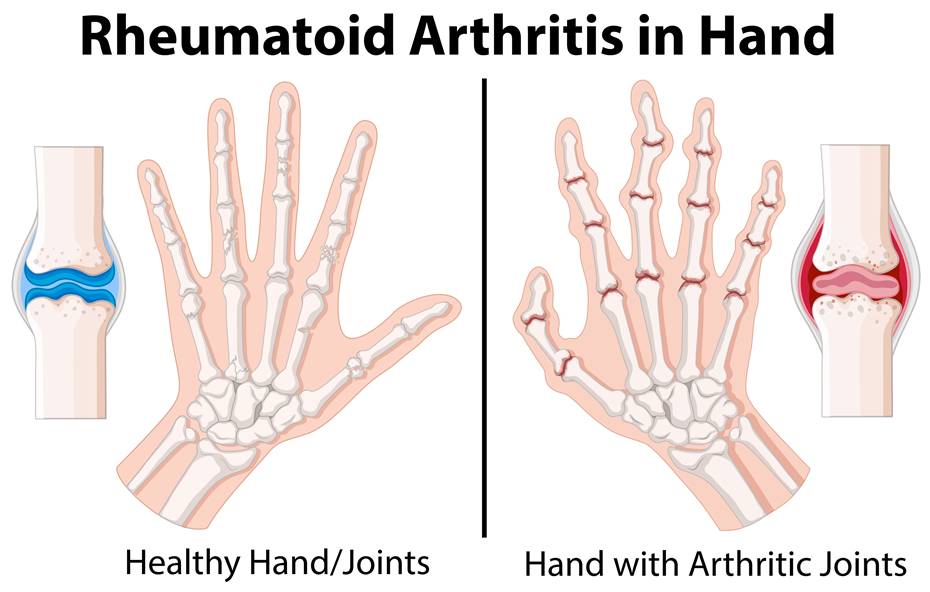
Shutterstock
Exhibit 1: History and Physical
Client reports significant morning stiffness that takes “an hour to get going.” Reports fatigue and decrease in appetite. Pain in hands and shoulders.
Exhibit 2: Laboratory Results
- ESR: 40 mm/hr
- CRP: 35 mg/dL
- ANA: Positive
- WBC count: 12,000/mm³
Exhibit 3: Vital Signs
- Temperature: 38.1°C (100.6°F)
Diagram Completion:
- Condition Most Likely Experiencing: Rheumatoid arthritis
- Actions to Take:
- Check client’s CBC.
- Assess client for a history of IV drug use.
- Parameters to Monitor:
- WBC and platelet counts.
- Development of chest pain or shortness of breath.
Question 43: Evisceration Management
A nurse is caring for a client who is 1-day postoperative following abdominal surgery. On assessment, the nurse notices evisceration at the surgical site. Which of the following actions should the nurse take?
- Apply saturated abdominal dressing.
- Cleanse the site with hydrogen peroxide.
- Cover the site with dry, sterile gauze.
- Use sterile gloves to reinsert protruding viscera.
Question 44: C. Difficile Precautions
A nurse is caring for a client who has a stool culture that is positive for Clostridioides difficile. Which of the following infection control precautions should the nurse take?
- Remove gloves before leaving the client’s room.
- Place the client in a negative pressure room.
- Use an alcohol-based hand rub following client care.
- Wear a face shield prior to entering the room.
Question 45: Age-Related Pulmonary Changes
A nurse is creating an activity plan for an older adult client. In the planning, the nurse considers the physiologic changes that may affect pulmonary function related to the normal aging process. Which of the following age-related physiologic changes should the nurse consider in the plan?
- Decreased risk for atelectasis
- Increased diaphragmatic movement
- Increased chest wall compliance
- Decreased blood oxygenation
Question 46: Measles Precautions
A nurse is caring for a client who has measles. Which of the following types of precautions should the nurse implement?
- Airborne
- Droplet
- Contact
- Protective
Question 47: Fluticasone Inhaler Teaching
A nurse is providing discharge teaching to the parent of a child who has a prescription for fluticasone metered-dose inhaler. Which of the following statements should the nurse include in the teaching?
- “Administer this medication before any other inhaled medications.”
- “Rinse mouth and gargle with water after each use.”
- “Administer this medication as needed for symptom control.”
- “Growth may be accelerated while using this medication.”
Question 48: Gambling Disorder Treatment
A nurse is caring for a client who is requesting treatment for a gambling disorder. Which of the following medications should the nurse expect the provider to prescribe?
- Varenicline
- Disulfiram
- Sertraline
- Clonidine
Question 49: Contact Precautions Conditions
A nurse leader is preparing an educational program on infection control measures. Which of the following conditions should the nurse include when discussing contact precautions?
- Streptococcal pharyngitis
- Scarlet fever
- Measles
- Varicella-zoster
Question 50: Synchronized Cardioversion
A nurse on the cardiac care unit is caring for a client who is hemodynamically unstable. For which of the following dysrhythmias should the nurse plan for synchronized cardioversion?
- Premature atrial complexes
- Ventricular fibrillation
- Atrial fibrillation
- Ventricular asystole
Question 51: Sprained Ankle Discharge Teaching
A nurse in the emergency department is providing discharge teaching to a client who has a sprained ankle. Which of the following should the nurse include in the teaching?
- Maintain foot above the level of the head.
- Expect numbness and tingling for the first 24 hr.
- Apply ice on the ankle for 20 min intervals.
- Perform range of motion exercises for the affected joint.
Question 52: Use of Restraints
A nurse is teaching a newly licensed nurse about the use of restraints for adult clients. Which of the following information should the nurse include in the teaching?
- The nurse should document observation of the client every 15 min.
- The provider should assess the client 48 hr after the restraint is applied.
- The prescription for a restraint should be renewed by the provider 6 hr after application.
- The nurse should assist the client with range-of-motion exercises every 12 hr after restraint application.
Question 56
A nurse is caring for a client who reports difficulty falling asleep at night. Which of the following actions should the nurse take?
- Encourage the client to ambulate in the hallway 1 hr before bedtime.
- Tell the client to avoid drinking fluids 1 hr before bedtime.
- Schedule routine care tasks during hours when the client is awake.
- Advise the client to leave the television in the room on when trying to fall asleep.
Question 57
A nurse is caring for a client who is receiving a blood transfusion at 125 mL/hr and develops a hemolytic reaction. Which of the following actions should the nurse perform?
- Infuse 0.9% sodium chloride IV.
- Administer an antipyretic.
- Decrease the infusion rate to 75 mL/hr.
- Place the client in a left lateral position.
Question 58
A nurse in an inpatient psychiatric unit is setting short-term goals for a client who was admitted for treatment of anorexia nervosa. Which of the following is an appropriate short-term goal the nurse should set?
- The client will reach an appropriate body weight.
- The client will gain 2 to 3 lb weekly.
- The client will verbalize a realistic body image.
- The client will develop a personalized meal plan.
Question 59
A nurse is assessing a child who has new onset varicella. Which of the following findings should the nurse expect?
- White nits on the hair shaft near the child’s scalp
- Pruritic vesicles with erythematous base on the child’s face
- Discolored pruritic warts on the child’s feet and ankles
- Koplik spots with blue-white centers in the child’s mouth
Question 60
A nurse is caring for a client who is taking levothyroxine. Which of the following findings should the nurse identify as an adverse effect?
- Depression
- Weight loss
- Cold intolerance
- Constipation
Question 61
A nurse is educating a client who has chemotherapy-induced peripheral neuropathy. Which of the following information should the nurse include in the teaching?
- Wear gloves when washing dishes.
- Wear shoes that are loose fitting.
- Inspect feet for redness weekly.
- Eat foods that are low in fiber.
Question 62
A nurse is inserting an IV catheter for a client who requires fluid replacement. Which of the following actions should the nurse take?
- Apply the tourniquet 15 cm (6 in) above the insertion site.
- Check for pulsation at sites proximal to the tourniquet.
- Anchor the vein by stretching the skin 2.5 cm (1 in) proximal to the insertion site.
- Wipe the skin dry before inserting the catheter.
Question 63
A nurse is caring for a client who is receiving continuous feedings via NG tube. Which of the following actions should the nurse take?
- Irrigate the client’s tube with 10 mL of cool water every 6 hr.
- Elevate the head of the client’s bed to a 15° angle.
- Replace the client’s feeding bag every 72 hr.
- Check the client’s gastric residual every 4 hr.
Question 64
A nurse is preparing to administer lactated Ringer’s 500 mL IV to a client to infuse over 30 min. The nurse should set the IV pump to deliver how many mL/hr? (Round the answer to the nearest whole number. Use a leading zero if it applies. Do not use a trailing zero.)
- 1000
Question 65
A nurse is caring for a client who was in a motorcycle accident. Click to highlight the findings that require follow-up.
- Pain as 10 on a scale of 0 to 10
- Left lower extremity (LLE) pedal pulse +1
- capillary refill 5 seconds
- extremity edematous
- cool to the touch
- tingling in their left toes
Question 70
The nurse is caring for the client who has returned from PACU following a fasciotomy. The client returns from surgery to the PACU following a fasciotomy. Which of the following assessment findings indicates the procedure was effective? For each assessment finding, click to specify if the client’s condition is improved or not improved.
| Assessment Finding | Improved | Not Improved |
| Capillary refill | X | |
| Pedal pulse | X | |
| Sensation | X | |
| Extremity temperature | X | |
| Edema | X | |
| Pain level | X |
Question 71
A nurse is caring for a client who has a new diagnosis of gout. Which of the following medications should the nurse anticipate the provider to prescribe?
- Allopurinol
- Ibuprofen
- Lisinopril
- Atorvastatin
Question 72
A nurse is caring for a 7-month-old infant who is being treated for severe dehydration. Which of the following assessment findings indicates the treatment was effective?
- Flat anterior fontanel
- Skin turgor displaying tenting
- Hyperpnea
- Cool, mottled skin
Question 73
A nurse is teaching a client and their family about home hospice care. Which of the following information should the nurse include in the teaching?1
- Hospice care improves quality of life through palliative care.2
- Hospice 3care provides 24-hr, in-home care.
- Hospice care is intended to postpone death.
- Hospice care encourages the family to coordinate health care services.
Question 74
A nurse is providing nutritional teaching to a client who is at 10 weeks of gestation. Which of the following statements should the nurse identify as an indication that the client understands the teaching?
- “I should choose foods that contain saturated fat instead of monounsaturated fat.”
- “I should consume 30 grams of protein per day during my pregnancy.”
- “I should avoid eating soft cheeses during my pregnancy.”
- “I should limit my caffeine intake to 500 milligrams per day.” ATI Comprehensive Predictor Assessment
Question 75
A nurse is caring for a client who has a do-not-resuscitate (DNR) prescription. The client experiences cardiac arrest, and another nurse starts CPR. Which of the following actions should the nurse caring for the client take?
- Continue CPR until the provider arrives.
- Notify the ethics committee for immediate assistance.
- Contact the family to determine what they would like to have done.
- Stop the CPR and inform the nurse of the client’s advance directives.
Question 76
A nurse is planning care for a client who has a deep vein thrombosis in the right leg. Which of the following actions should the nurse include in the plan?
- Maintain client on bed rest.
- Elevate the client’s affected extremity.
- Apply cold compresses to the client’s affected extremity.
- Massage the muscle of the client’s affected extremity.
Question 77
A nurse is providing teaching the caregivers of a client who has Alzheimer’s disease and wanders during the night about safety. Which of the following recommendations should the nurse make?
- Encourage the client to rest during the day.
- Ask the client why they continue to get out of bed.
- Move the client’s mattress to the floor.
- Keep a television on at night in the client’s room.
Question 78
A nurse is providing teaching about the use of transdermal fentanyl patches to a client. Which of the following statements by the client indicates an understanding of the teaching?
- “I should fold the patch in half with the medication side touching before disposal.”
- “I should cut the patch in half before application.”
- “I should apply a heating pad to the patch when I have joint pain.”
- “I will rotate the patch to a different extremity each day.”
Question 79 (Case Study)
The nurse is reviewing the EHR of a 3-day-old neonate born at 34 weeks of gestation and who is Small for Gestational Age (SGA). Click to highlight the findings that require follow-up.
- Respiratory rate 70/min
- Substernal retractions and nasal flaring noted
- Frequent episodes of apnea, responds to tactile stimuli
- Abdominal circumference increased by 1 cm (0.4 in) since the prior assessment
Question 80 (Case Study)
The nurse is reviewing the findings in the electronic medical record (EMR). Select the findings that are risk factors for developing a complication.
- Gestational age
- UAC
- 5-minute Apgar score
- Feeding route
Question 81 (Case Study)
Complete the following sentence by using the list of options.
The neonate is at most risk for developing bowel perforation due to necrotizing enterocolitis.
Question 82 (Case Study)
For each potential intervention, indicate if it is anticipated or not anticipated for a client with suspected Necrotizing Enterocolitis (NEC).
| Intervention | Anticipated | Not Anticipated |
| Obtain an arterial blood gas. | X | |
| Administer total parenteral nutrition (TPN). | X | |
| Administer IV antibiotics. | X | |
| Keep the neonate prone. | X | |
| Attach the OG tube to low intermittent suction. | X | |
| Obtain a CBC and blood culture. | X | |
| Repeat an abdominal x-ray every 24 hr. | X |
